
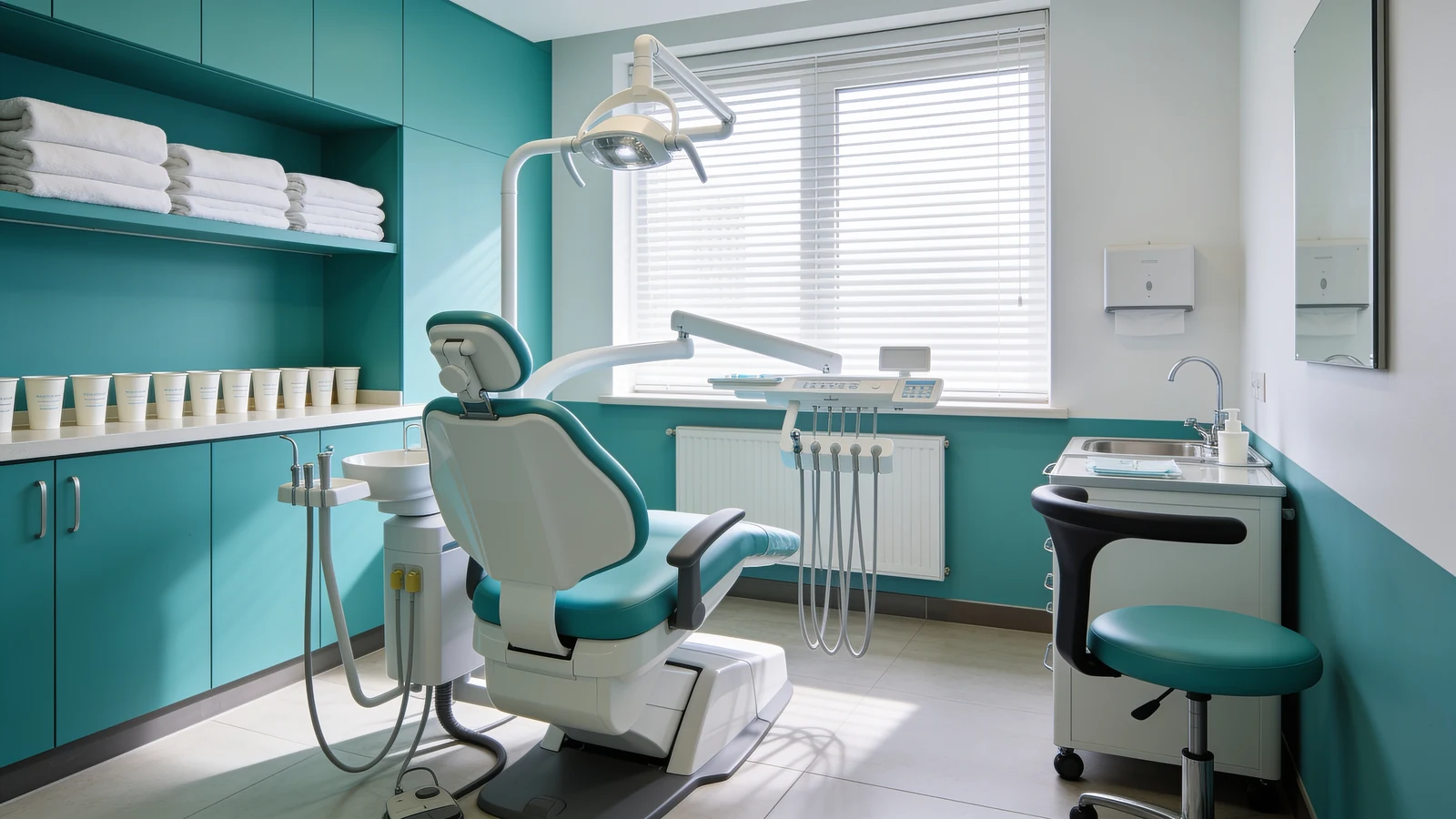
Bleeding gums when brushing are often blamed on a brush that is too hard - and therefore goes unnoticed. But behind it there is often a bacterial inflammation that does not go away on its own. Periodontology Hattingen deals with precisely such diseases of the periodontium. If you recognize the warning signs early, you can avoid tooth loss and relieve the strain on your entire organism. In this article we explain how periodontitis occurs, how you can recognize it and what treatment options are available in our practice.
What is periodontitis?
Periodontitis is a chronic bacterial inflammation of the periodontium. It usually begins at the gum line and over time spreads to the jawbone, the periodontal membrane and the tooth socket. The trigger is bacteria that settle in the gum pockets and form a biofilm. If they manage to penetrate deeper, the body reacts with inflammation, which gradually destroys the tissue that anchors the tooth in the bone.
Adults are primarily affected - periodontitis is considered the most common cause of tooth loss in adults. What's particularly tricky is that the disease often progresses almost painlessly for years. Gums that slowly recede are accepted, as is occasional bleeding. The inflammation progresses unnoticed until teeth become loose or even fall out. An early diagnosis in ours Periodontology is therefore crucial to preserving your own teeth in the long term.
How do I recognize periodontitis?
Periodontitis rarely presents with sudden pain. Instead, the body sends clear warning signals over months that are often overlooked in everyday life. Anyone who takes them seriously will gain valuable time.
Warning signs
- Bleeding gums Brushing, flossing, or eating apples is one of the earliest signs. Healthy gums do not bleed.
- Swollen, red gums, which feels sensitive and is no longer pale pink and tight against the teeth.
- Persistent bad breath, which returns despite thorough care. It occurs when bacteria thrive in the gum pockets and secrete degradation products.
- Loose teeth or a changed bite feeling are a later indication. If the bone has already broken down, teeth lose their anchoring.
- Receding gums with visibly longer teeth or exposed tooth necks indicates advanced inflammation.
If one or more of these symptoms occur, a dental examination is advisable. The earlier periodontitis is detected, the easier it is to stop the progression.
What happens if periodontitis is left untreated?
Without treatment, the inflammation continues to progress. The jawbone continues to deteriorate, the gum pockets deepen, and the teeth gradually lose their anchorage. The result is wandering teeth, visible gaps and ultimately the loss of one or more teeth. If it has come to this point, there is often only one thing left to do Implants or a prosthetic restoration.
However, the effects don't stay in the mouth. Numerous studies show that untreated periodontitis is linked to systemic diseases. The bacteria enter the bloodstream via the inflamed, perfused pockets and put a strain on the entire organism:
- Cardiovascular diseases: The risk of arteriosclerosis and heart attack has been proven to increase.
- diabetes: Periodontitis worsens blood sugar control and, conversely, diabetes promotes inflammation - a vicious circle.
- Premature births: Pregnant women with untreated periodontitis are at increased risk of premature delivery and low birth weight of the child.
If you stop the inflammation, you not only protect your teeth, but your entire body.
How is periodontitis treated?
Treatment is gradual and begins with an accurate diagnosis. Only when the extent of the disease is clear will we determine the treatment plan together with you.
Diagnostics
First, we examine your gums and tooth mobility. With the so-called pocket depth measurement, we feel all around each tooth and record how deep the gum pockets already are. Deep pockets are a reliable indicator of bone loss. We also take an x-ray to visualize the extent of bone loss and to assess the roots and surrounding structures. This creates a complete picture of your periodontal condition.
Systematic therapy
Systematic periodontitis therapy follows based on the findings. It includes thorough cleaning of the root surfaces beneath the gum line, where bacterial plaque and hard deposits have settled. Using hand instruments and ultrasound, we remove biofilm, tartar and inflamed tissue so that the gums can attach healthily to the tooth again. In some cases we support the treatment locally with antibacterial rinses or medication.
The subsequent aftercare is crucial. Without it, there is a risk that the inflammation will return. A regular supportive one Prophylaxis keeps pockets clean and monitors the condition of your gums. In this way, new inflammations can be detected and stopped early.
Does the health insurance company cover the costs?
Yes, systematic periodontitis therapy is a health insurance benefit for those with statutory health insurance. The prerequisite is that the disease has reached an appropriate stage and is medically indicated. The diagnostics, cleaning of the root surfaces and aftercare are billed as part of the remedy catalog. In the case of particularly complex procedures such as augmentative bone augmentation, a personal contribution may arise - we will inform you about this in advance.
The accompanying prophylaxis to maintain the success of the treatment is usually billed as a self-pay service, but many health insurance companies provide annual subsidies for this. We advise you on your individual options and create transparent cost plans.
What can you do yourself?
The treatment in practice is only one side. Your daily cooperation is at least as important, because without it no therapy can be successful in the long term.
- Thorough oral hygiene morning and evening, supplemented by dental floss or interspace brushing, removes the biofilm before it can take hold.
- Regular prophylactic appointments in our practice monitor the condition of the gums and prevent recurrences.
- Stop smoking: Tobacco consumption is one of the strongest risk factors - it worsens blood flow to the gums and inhibits healing.
- Healthy eating with little sugar stabilizes the oral environment and weakens the bacteria that promote tooth decay and inflammation.
These measures do not replace treatment, they complement it and ensure its long-term success.
Have periodontitis treated in Hattingen
In our practice in Hattingen we combine modern diagnostics with systematic, comprehensible therapy. We take the time to explain your findings in detail and accompany each treatment step transparently. An experienced team of dentists, prophylactic assistants and dental hygienists work closely together during treatment - from the first conversation through therapy to regular aftercare.
This means that your periodontitis is not a diagnosis that you bear alone, but rather a path that we take together. You can read more about supportive care in our article professional teeth cleaning in Hattingen.
Frequently asked questions about periodontitis
Is periodontitis curable?
Periodontitis cannot be completely reversed because tissue that has already broken down only regenerates to a limited extent. However, it is easily treatable and can be brought to a standstill. Consistent therapy paired with regular aftercare prevents progression and preserves your teeth in the long term.
How long does the treatment last?
The duration depends on the stage of the disease. Systematic therapy is usually spread over several sessions within a few weeks. The subsequent supportive prophylaxis is carried out permanently at intervals of around three to four months - it is the key to long-term success.
Can I prevent periodontitis?
Yes. Thorough daily oral hygiene, regular prophylactic appointments, not smoking and a low-sugar diet significantly reduce the risk. Pre-existing conditions such as diabetes should also be well controlled. If you know the warning signals and take them seriously, you can react early - and save yourself expensive treatments.
Make an appointment for your examination
If you notice any of the warning signs described or are unsure whether your gums are healthy, have them checked. An early examination decides whether the inflammation can still be stopped or whether consequences have already arisen.
Make your appointment for a periodontal examination with the dentists at Treidelbrunnen, Heggerstraße 1, 45525 Hattingen. You can reach us by phone at +49 2324 501287. We will advise you in German, English or Arabic and take the time to answer your questions.
Make an appointment for your examination – we look forward to seeing you.